
Design-Build vs. General Contractor: Which Is Right for Your Remodel?
Hiring a contractor shouldn't be a gamble.
Before you decide who builds your remodel, you are deciding how it gets run. Design-build and hiring a general contractor are two ways to carry a project from first idea to finished room, and the right one depends on where you are: how far along your design is, how complex the work is, and how much of the project you want to manage yourself. Below, the models sit side by side so you can weigh the trade-offs and choose with your eyes open.
By Scott Hochuli, Founder·Last updated August 2026
Design-build or general contractor: which should you choose?
The short answer
There is no universal winner; the right model depends on your project. Choose design-build when your design is not finished yet, the project is complex, or you want one team accountable for both the design and the construction. Choose a general contractor when you already have complete plans, often from an architect, and someone to manage the trades. Consider acting as your own general contractor only if you have the time, construction knowledge, and risk tolerance to run the job yourself.
Prefer to watch
Scott on choosing between the two models
The same answer in his own words. How the two models differ on design, pricing, and accountability, when a general contractor is the right call, and what happened on a project where we drew the plans but someone else built them.
Scott Hochuli, Founder, Hochuli Design & Remodeling Team. Runtime 2:18.
Read the transcript
If you're weighing a design-build company against a general contractor, you are already doing the smart thing. You're deciding how your project gets run before you hand it to anyone. Hiring a contractor shouldn't be a gamble, and this is where a lot of that risk is decided.
Most people I sit down with have put this remodel off for years, and usually there's a reason. A project that went sideways, a friend who got burned. If you're cautious, that's not a flaw. That is experience talking.
Here's the difference. A general contractor builds. You or an architect you hire own the design and the contractor prices and builds from those plans. That works well when the design is finished and someone is there to captain the whole thing. Design-build puts the design and the construction under one roof on one proposal with one team accountable start to finish. When something needs to change, you are not refereeing between a designer and a builder.
A good general contractor working from a complete set of plans is a real and valid way to remodel. I'll say that plainly. Design-build earns its keep when the design is not figured out yet. When the project is complex or when you want one team to own the outcome.
A few years ago, a couple we had worked with asked us to design their second home in Coronado, California. We're not licensed there, so a local contractor built it from our plans, and our plans were detailed, right down to a sample showing how each layer of trim should come together.
It still did not survive the handoff. Cabinets got swapped for a different line without anyone asking us. The trim went in wrong. I even flew out there and spent the morning on site with the crew, plans in hand, laying out the pattern myself so they could see what we had drawn.
It got built the way it was designed, but only because we were there watching. Later, the homeowner told Lorrie that hiring us for design and the oversight was like insurance it would get done right. The gap between the people who design your project and the people who build it is the gap I built this company to close.
Whichever way you go, the path with us is simple. We have a conversation, not a sales call. You see your design and your fixed price before any work begins. Then we manage the build.
If the one-team model is what you want, that is exactly what we do. One team. One price. No surprises.
What is design-build?
Design-build means one company owns both the design and the construction under a single agreement. You hire one team, and that team carries the project from the first concept through the finished space. Because the people who design the work are the same people who price and build it, the plan and the number stay connected the whole way. The Design-Build Institute of America, the national body that sets standards for the method, defines it by exactly that single point of responsibility. If you want to see how the model plays out step by step, our design-build remodeling overview walks through it in depth.
What is a general contractor?
A general contractor builds. The arrangement is also called design-bid-build, because the design gets finished first, then priced, then constructed. In this model the design comes from somewhere else, usually you, an architect, or a designer you hire separately, and the general contractor takes those finished plans, prices the work, and manages the trades who build it. A skilled general contractor working from a complete, well drawn set of plans can deliver excellent work. The key words are complete and well drawn. Because the contractor did not create the design, the quality of the plans you hand over shapes how smoothly the build goes, and it shapes the proposals that come back. Fewer plan sets are construction-ready than their owners expect, which is worth knowing before you price anything, so our guide to construction-ready plans walks through what a builder needs to see. On the pricing side, why the lowest bid usually costs more covers what to watch for.
What about acting as your own general contractor?
There is a third path: managing the project yourself and hiring the trades directly. Homeowners who do this are acting as their own general contractor. It can lower certain costs, and for a small, well defined project with an experienced owner, it can work. It also means you own the schedule, the coordination, the permits, and every problem that comes up. For most people remodeling a home they live in, that is a second full time job. We include it here because it is a real option, not because it is the right one for most homeowners.
Design-build vs. general contractor, side by side
So how do the two compare in practice? The comparison below lays the models against the seven things that matter most when you are choosing between them, from who owns the design to how each one handles a change once work is underway.
| Compare | Design-build | General contractor |
|---|---|---|
| Who designs | Design-buildOne team.The company that builds it also designs it, so the plan is shaped by the people who will construct it. | General contractorYour choice of designer.You bring an architect or designer you pick, which gives you full control over that hire and the design direction. |
| Who prices | Design-buildThe team that designed it.Price and design are reconciled as the design develops, so the two stay connected. | General contractorPriced from finished plans, open to competition.You can take one complete set of plans to several contractors and compare proposals. Accuracy depends on how complete the plans are. |
| Single point of accountability | Design-buildOne.The same team owns design and build, so there is no gap between them to fall into. | General contractorSplit, by design.The designer owns the plans, the contractor owns the build. That separation is a check some homeowners want; coordinating the two is your role or your architect's. |
| Change-order handling | Design-buildHandled inside one team.You work the change through with the same people who designed and are building it, priced in one place, not negotiated between a separate designer and a builder. | General contractorFormal change orders.Changes are worked out against the original agreement as they arise, keeping each adjustment documented and itemized. |
| Timeline | Design-buildThe phases can overlap.Because one team owns both, construction planning can begin while the design is still being refined. Compressing that overlap is one of the main reasons the method exists. | General contractorThe phases run in sequence.Design finishes, then the work gets priced, then construction starts. Each step waits on the one before it, which adds calendar time but makes each stage easier to plan around. |
| Cost predictability | Design-buildSet before the build.Through the Project Development Agreement, you see your design and fixed price in writing before construction begins, so the number is not a moving target. | General contractorDepends on the plans.Complete, well drawn plans can produce a tight, competitive price. Gaps tend to surface as added cost during the build. |
| Best-fit project | Design-buildDesign not yet finished, or complex scope.Best when you want one team to own the outcome start to finish. | General contractorComplete plans, hands-on owner.Best when the design is done and you or your architect can captain the trades. |
A skilled general contractor working from complete plans is a valid, often flexible path. The right model depends on your project.
Who is each model right for?
A general contractor is a strong fit when...
A general contractor is often the right call when your design is already complete and you are comfortable staying involved. If you have an architect you trust, a full set of drawings, and you want the option to price that finished design with more than one builder, a general contractor fits well. It also suits homeowners who like being hands on, who prefer to hold the design and the build as two separate relationships, and who have time to help coordinate them. If you want to understand where the dollars go before you choose anyone, our remodeling cost breakdown by project type lays out the ranges.
Design-build is a strong fit when...
Design-build tends to fit homeowners who do not yet have a finished design, or who would rather not run the project themselves. Many people weighing it have a home that no longer fits how they live, and they want one team to carry the plan, the price, and the build without it becoming a second job. If refereeing between a designer and a builder sounds like the opposite of what you want, design-build removes that seam. You can see how the work unfolds week to week in our step-by-step remodeling process.
When does doing it yourself make sense?
Acting as your own general contractor makes sense in a narrow set of cases: a smaller, clearly defined project, a homeowner with real construction knowledge, and the time to manage schedules, permits, and trades. If that is you, it can lower costs. For most people remodeling a home they live in, the hours and the risk outweigh the savings, which is why we treat it as an option to understand rather than a default to reach for.
Straight Numbers
What it costs to work this way with us
Choosing between the two models is one decision. Deciding whether we are the right company for you is another, and you should be able to answer it without booking anything first. So here are the two numbers that matter.
Minimum project investment
$50,000
Unless the work folds into a larger project. That is not a posture. It is the point below which our process costs you more than it gives back, and we would rather say so on a web page than in your living room.
Design phase
5% of the midpoint
Our design work is paid. Once we agree on direction, we write a Project Development Agreement at 5% of the midpoint of your investment range. It covers the design, the selections, the engineering coordination, and the fixed price you see before construction starts.
We do not hand out written proposals at no charge, and that is deliberate. Pricing a remodel with any honesty takes weeks of design work, and a number produced without that work is a guess dressed up as a quote. You find out what it costs later, in change orders. Paying for the design phase is what buys you a real number instead, and the drawings are yours either way.
If you would rather see where the dollars land by project type before you talk to anyone, start with our remodeling cost breakdown for Phoenix.
Proof
What the one-team model looks like from the other side
Those are our numbers and our reasoning. Here is what the people who paid them say about it, including one from a trade partner who works alongside us rather than hiring us.
4.9
Average across 100 reviews
Google, 40 reviews. Houzz, 34 reviews. GuildQuality, 26 reviews. Counts as of July 2026.
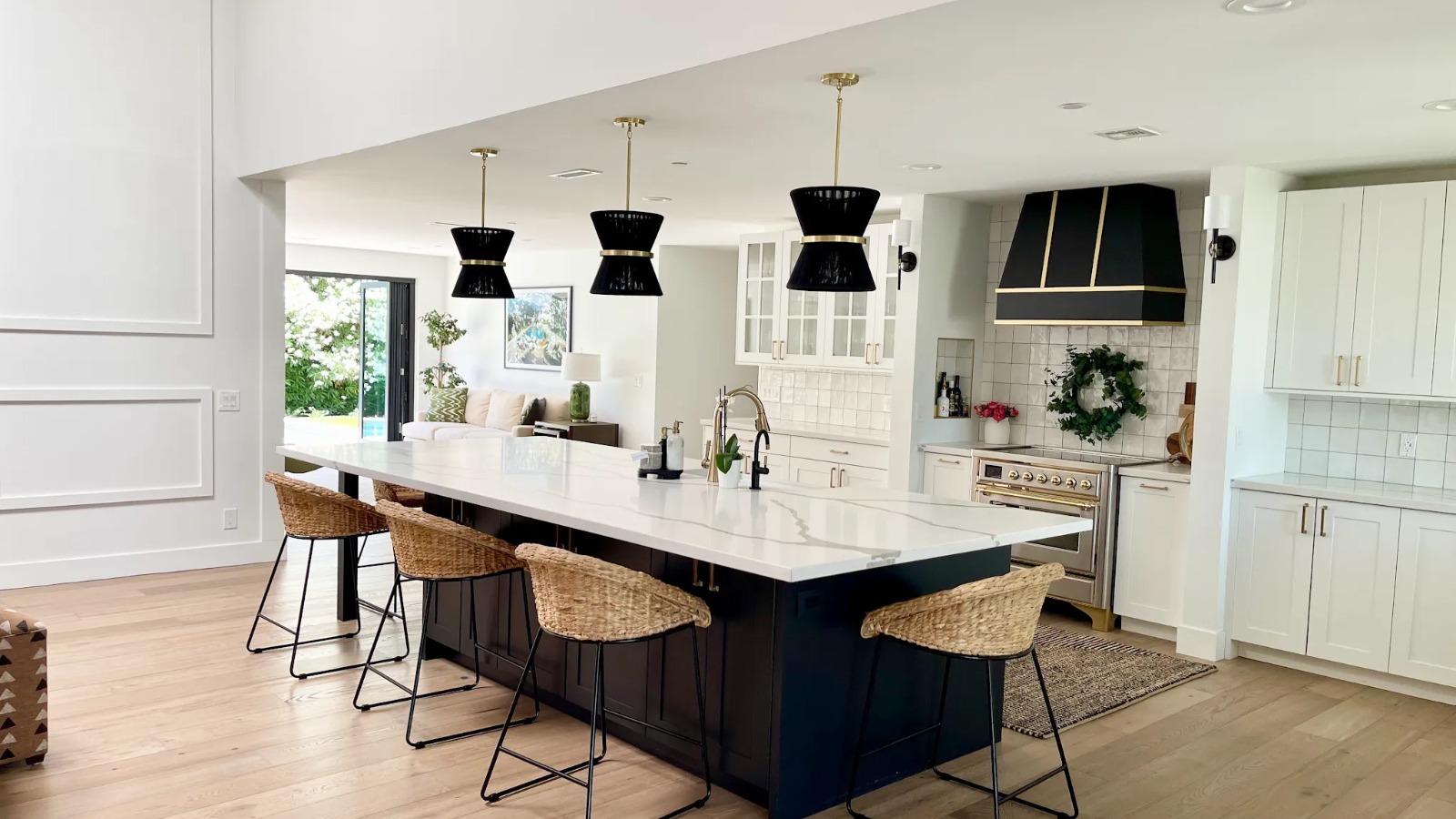
We were scared to remodel the kitchen in our Phoenix home because we'd had a bad experience in the past. Once we found the Hochuli Team online, we were blown away by the amount of information they have on their website about potential pricing, the overall process and timing.
Sarah R.Phoenix, kitchen remodel
Lorrie's expertise in space planning and putting our thoughts into a beautiful design was better than expected. ... There was clear, open, and honest communication with the entire team, including subcontractors. We were given a timeline and they stuck to that schedule.
Zabreena S.Paradise Valley, kitchen and three bathrooms
They have an eye for detail and refuse to cut corners, which in return produces a quality project from start to finish. The job sites are always neat and tidy and there is always a fresh set of blueprints laid out for me.
Dean J.Phoenix, trade partner on our projects
Those are three of a hundred. You can read the rest of our reviews.
A Note from Scott
Why I build this way, and when I would point you elsewhere
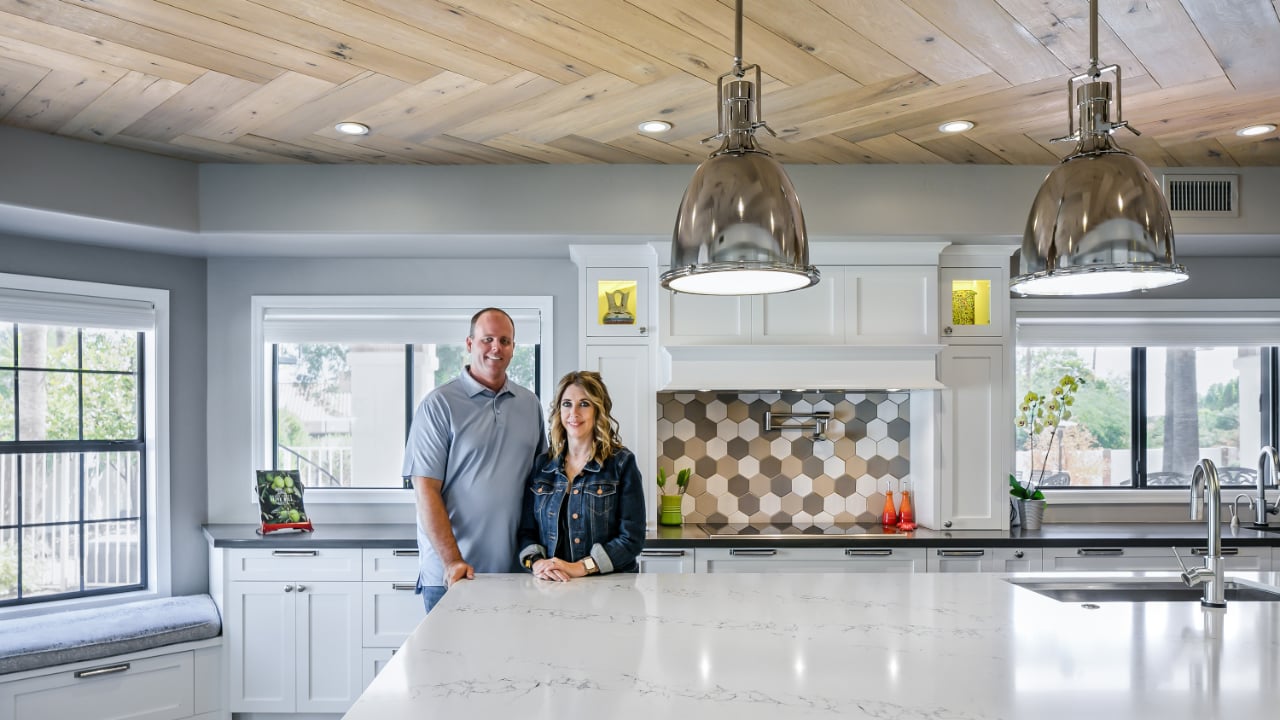
I have sat across the table from a lot of people who waited years to start a remodel. Usually there is a reason they waited, and usually it has a name attached to it: a project that went sideways, or a contractor who stopped answering the phone. So before I tell you what I believe, let me tell you what I am not going to do. I am not going to pretend one model is right for everyone.
If you already have a complete set of plans you love, and you like staying in the middle of a project, a good general contractor can serve you well. I mean that. I would rather you hear it from me than notice I left it out.
What convinced me of the other side did not come from a brochure. A couple who trusted us asked us to design a remodel for their second home in Coronado, California. We are not licensed there, so a local contractor built it from our plans, and those plans were detailed down to a sample showing how each layer of trim should come together. It still did not survive the handoff, and it only finished close to the design because Lorrie and I kept flying out to check the work against it. I tell the whole story in the video above.
Hiring us for the design and the oversight was like insurance it would get done right.
What the homeowner said to Lorrie when the project was finished, in Scott's words
That gap, between the people who design your project and the people who build it, is the gap I built this company to close. When design and construction live on two different teams, everything depends on a clean handoff, and the space in the middle quietly becomes yours to manage. I did not want to hand that to people who trusted us. So we put the design and the build under one roof, on one price you see before any work begins, with one team accountable from the first sketch to the last walk-through.
I have been remodeling Phoenix homes since 1992, and I started this company in 2001 to do it this way on purpose. Whichever model fits you, I will tell you the truth about it.
Scott Hochuli
Founder, Author of Crush Expectations
Qualifying party, Arizona ROC 173428. Verify us before you hire us.
Common Questions
Design-build vs. general contractor: common questions
Not inherently. The honest answer is that it depends on your project, not the label. Design-build reconciles the design and the price before construction starts, which reduces surprises. A general contractor lets you price a finished design with more than one builder, which can sharpen the number when the plans are complete. In both cases, total cost is driven by the scope, how finished the design is, and how many changes come up along the way.
Usually not. In design-build, the design work happens in house, so the same team that builds your remodel also designs it. With a general contractor you typically bring your own architect or designer, because the contractor builds from plans made elsewhere. If you already have an architect you trust, that points toward the general contractor model.
Generally no, and that is a real trade-off. Design-build is one team on one proposal, so you are not lining up several builders against the same set of plans. If comparing multiple proposals on a finished design matters most to you, the general contractor model is built for exactly that. Design-build trades that comparison for one team that owns the design and the price together.
Both models handle changes, but differently. With a general contractor, a change usually becomes a formal change order against the original agreement, documented and priced as it comes up. With design-build, you work the change through with the same people who designed the project and are building it, so it gets priced in one place rather than negotiated between a separate designer and a builder.
The Bottom Line
Still deciding? Start with a conversation.
There is no universal right answer here, only the right answer for your project. If your design is finished and you want to captain it, a general contractor can serve you well. If the design is still taking shape, or you would rather one team own the plan, the price, and the build, that is the model we have built our whole company around.
Step One
We have a conversation
Not a sales call. We listen to what you want, and we tell you plainly whether your project fits how we work.
Step Two
You see the design and the price
The design gets drawn and the fixed price gets written down before any construction starts. No moving target.
Step Three
We build it
One team runs the work from the first day to the last walk-through, and you move back into a home that fits how you live.
One team. One price. No surprises.
Not sure yet? That is fine too. A first conversation is not a sales call, and it will not hurt our feelings if you decide a different path fits you better. If you are still gathering your bearings, our guide to choosing a remodeling contractor is a good next read.
Let's Start the Conversation
Ready When You Are
Picture the version of your home that finally fits how you live.
You came here to figure out how to choose. Now you know what to ask, what to check, and what real accountability looks like. When you are ready to put it to work, the next step is a conversation, not a sales call. We will talk through your project, tell you plainly whether we are the right team to build it, and you will leave knowing more than when you arrived, whether or not we ever work together.
One team. One price. No surprises.
A conversation, not a sales call. About twenty minutes, whenever works for you.