
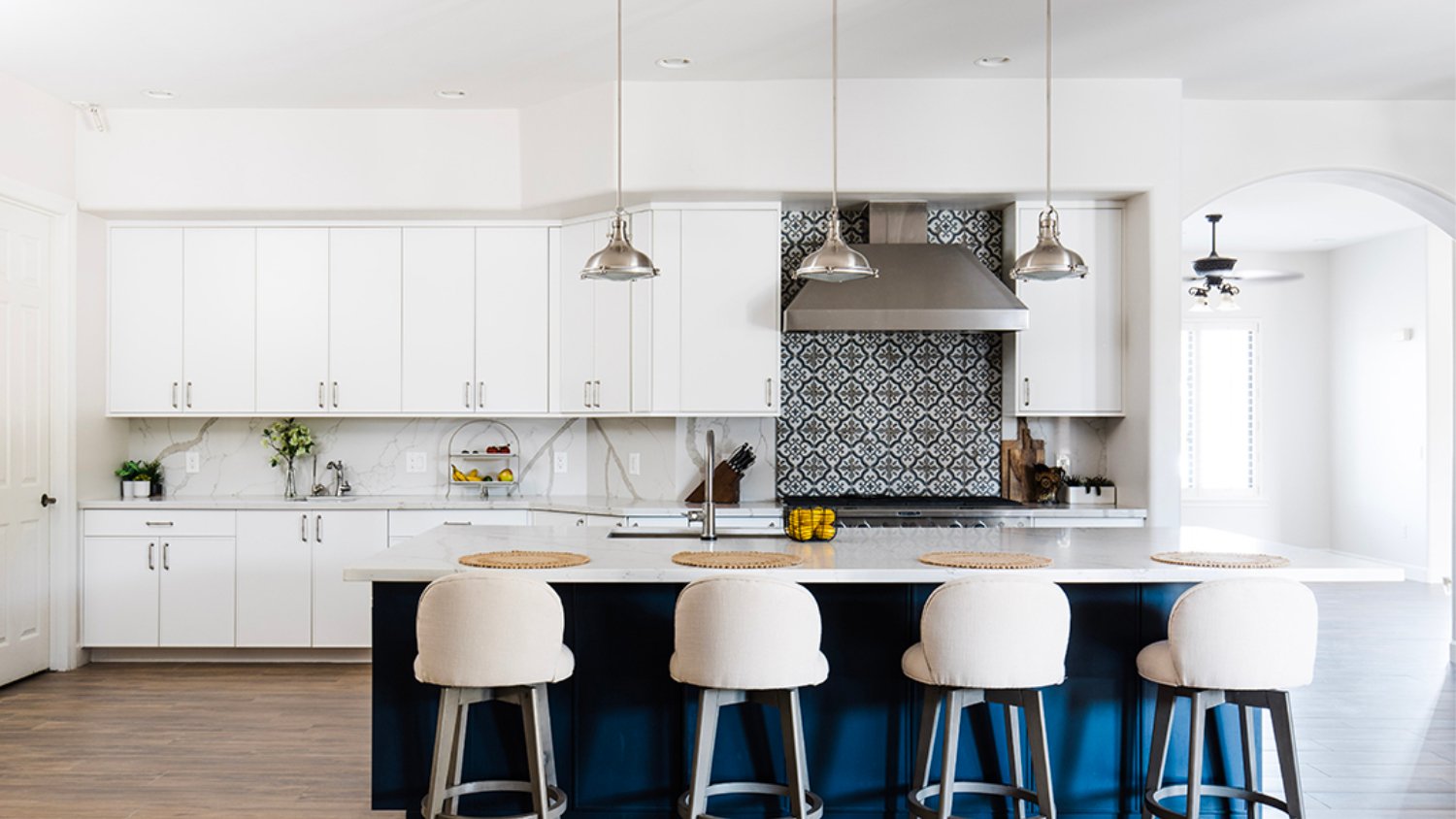
Serving Phoenix, Scottsdale, Paradise Valley & the East Valley
Design-Build Remodeling in Phoenix, AZ
You already know someone whose remodel went sideways.
The price that crept, the timeline that slipped, the contractor who got hard to reach once the demo dust settled. It usually traces back to one fault line: the people who designed the project and the people who built it were never the same team. Design-build closes that gap. One team draws it, prices it, and builds it, which leaves exactly one company accountable when you have a question.
Ours.
What design-build actually means, in plain terms.
A short explainer of how design-build remodeling works.
Most remodel regret isn't about the kitchen. It's about the process.
Here's what almost no one tells you before the first swing of the hammer. The thing that goes wrong is rarely the tile or the cabinets or the paint. It's the handoffs. A designer draws something a builder later says can't be built for that price. A contractor starts demo before anyone priced the surprise behind the wall. You become the messenger between two companies who each blame the other, on a project you're paying for and don't fully understand.
Design-build removes the handoff. The people who design your remodel and the people who build it answer to the same company, work from the same number, and sit on the same side of the table as you. That's the whole idea, and it's the reason a remodel can feel less like a gamble and more like a plan.
We've worked this way since 2001. Not because it's a trend, but because we watched the alternative fail people too many times to keep offering it.
What is design-build remodeling?
Design-build remodeling is a method where one company handles both the design and the construction of your project under a single contract. Instead of hiring an architect or designer first and then bidding the plans out to separate contractors, you work with one team that draws the project, prices it, and builds it. That single point of accountability is the defining feature. One contract, one price, one team responsible from the first sketch to the final walkthrough.
In plain terms, design-build means you don't have to act as your own general contractor. You're not hiring one company to dream it up and another to make it real, then hoping the two agree. The design and the build live under one roof, so the person who promises you something in the design phase is part of the same team that has to deliver it in the build phase.
That structure shows up in the small moments. When a question comes up partway through the work, there's one number to call. When a material runs long or a wall hides a surprise, the design side and the build side solve it together instead of pointing fingers across a contract line. And because the same firm carries the project start to finish, the price you agreed to is the price one company stands behind.
A design-build firm isn't a style or a trend. It's an accountability structure. For a remodel, where the unknowns are real and the stakes are personal, that structure is the difference between a project that drifts and one that holds.
What's the difference between design-build and design-bid-build?
The difference is structure. With design-build, one company designs and builds your project under a single contract. With design-bid-build, the traditional approach, you hire a designer first, then take the finished plans out to separate contractors for bids, then sign a second contract to build. Design-bid-build splits the work across two or more companies and two or more contracts. Design-build keeps it under one. That single difference is what changes the pricing, the timeline, and who's accountable when something goes wrong.
The traditional approach isn't wrong. For a large, highly custom new build, or when an owner wants competing bids on a finished set of plans, or on public projects where the law requires the designer and builder to stay separate, design-bid-build is often the right call. The separation is a feature in those cases.
A remodel of the home you live in is a different animal. The unknowns are real, the stakes are personal, and you're rarely a construction expert refereeing two companies. That's the setting where one team, one price, and one number to call stops being a convenience and starts being the thing that protects you.
How does the design-build process work?
The design-build process moves through five phases under one contract. It starts with a planning conversation to define scope and fit. If there's a project worth pursuing, you enter a paid design phase where the work is developed against a target investment range, with regular updates on whether it's tracking in range or running over. That phase ends in a fixed-price proposal you approve before any demo. Then the same team builds it, and a final walkthrough and warranty close it out.
The planning conversation.
We sit down and talk through what you're trying to do, the rough scope, and whether we're the right fit. No surprise quote, no pressure. This is where we both decide whether there's a real project here. If there is, the next step is a paid Project Development Agreement, and you'll know exactly what it covers before you commit to a thing.
Design and development.
This is the paid phase, and it's where the project actually gets figured out. We start with a target investment range, then design toward it. As the work develops, we keep you current on where you stand against that range, whether we're tracking in it or starting to run over. If something you want is going to push past the range, you hear about it early, while there's still room to choose. Sometimes that means deciding to spend more on the thing that matters to you. Sometimes it means finding another way to get there for less. The number doesn't surprise you, because you've been watching it the whole way.
The fixed-price proposal.
When the design is settled, the range resolves into one fixed-price proposal for the whole project. Before anything is torn out, you have it in hand. You approve it, or you don't. Either way you know the real number before the first swing of the hammer, not three weeks into demo.
Construction.
The same team that designed your project builds it. One number to call. When a wall hides a surprise, the people who drew the plan and the people doing the work solve it together, on our side of the contract, not yours.
Walkthrough and warranty.
We walk the finished project together, fix anything on the list, and stand behind the work after the trucks leave. The relationship doesn't end at the final payment.
What does a design-build remodel cost in Phoenix?
A design-build remodel in the Phoenix area generally starts around $30,000 for a bathroom and $75,000 for a kitchen, and runs from roughly $125,000 for a room addition to $150,000 and up for a whole-home remodel or an ADU. Where your project lands inside those ranges depends on its size, how much the layout changes, and the finishes you choose. Every project type has its own cost page with three investment tiers and current Phoenix numbers, so you can see a real range before you ever pick up the phone.
Most contractors won't put a number on a remodel until they have you on the phone. We publish ours, because the planning conversation goes better when you already know roughly what your project costs and what moves it. The same levers show up on every project: how big the space is, how far the layout shifts, what's hidden behind the walls of an older Phoenix home, and the level of finish you're after.
Each cost page walks through those drivers in full, with the three investment tiers, current Phoenix pricing and how it has changed, and an estimator that gets you to a preliminary range in a few minutes. This page is the front door to all five.
The number shouldn't be a secret you earn a sales call to hear. We put it on the page.
What can go wrong with a remodel, and how do you avoid it?
Most remodel problems trace back to a handful of causes: a price that wasn't real to begin with, a scope nobody pinned down, surprises behind the walls of an older home, and split accountability when two companies blame each other. Design-build removes some of these by structure, since one team carries the project and the price is settled before demo. It doesn't remove all of them. The honest protections are a defined scope, a fixed price you approve up front, and one company that owns the outcome.
The price wasn't real.
A low number wins the job, then climbs once the work starts. This is the most common remodel horror story, and it's usually baked in from the bid. The protection is a fixed price set against a defined scope before anything is torn out, which is what the Project Development Agreement phase produces.
Nobody pinned down the scope.
When the plan is vague, every decision becomes a renegotiation, and the costs and the friction pile up. A remodel needs the details settled on paper before the hammer swings, not figured out on the fly.
The walls held surprises.
In a Phoenix home built decades ago, what's behind the drywall is a real unknown: old wiring, failed plumbing, framing that isn't where the plans say. Surprises can't be eliminated. What matters is who absorbs them and how they're handled, which is far simpler inside one team than across two contracts.
Accountability was split.
When a designer and a builder are separate companies, the seam between them becomes your problem to manage. Design-build closes that seam, but it isn't automatic. Ask any firm, design-build or not, exactly who is accountable when something goes wrong, and get the answer before you sign.
The honest part
Design-build is a structure, not a guarantee. A design-build firm can still under-communicate, run late, or do work you're not happy with. Structure lowers the odds of the big failures; it doesn't replace the things you should check on any contractor: references, reviews, licensing, and how they handle the hard conversation when you ask the uncomfortable question. The right structure and the right firm are two separate checks. You want both.
Why does design-build work well for Phoenix-area homes?
Phoenix-area remodels carry specific complications: aging housing stock, desert-climate demands on materials and systems, HOA design rules across much of the Valley, and city-by-city permitting that varies from Scottsdale to Gilbert. Each is a place where a split design-and-build process tends to break down, with the designer and the builder disagreeing about what the home and the rules actually allow. Design-build handles them inside one team that knows the local conditions, carries the project through permitting, and answers for the whole thing start to finish.
The Valley's best homes are older homes.
Much of the most desirable housing across Phoenix and Scottsdale was built decades ago, in eras and styles you can't buy new. That's part of their appeal and part of their complication, since an older home asks more of the team remodeling it. One company that knows how homes of that vintage are built, and answers for the whole project, handles that far better than a designer and a builder meeting the house for the first time from opposite sides of a contract.
The desert is hard on buildings.
Heat, sun, and monsoon swings put real demands on materials, finishes, and mechanical systems. Choices that look fine in a showroom don't all hold up here. A team that builds in this climate every day designs for it from the start, instead of designing first and learning later.
HOA and permitting vary by city.
Much of the Phoenix metro sits under HOA design review, and permitting differs from one municipality to the next. We work across Phoenix, Scottsdale, Paradise Valley, Tempe, Chandler, Gilbert, Mesa, and Ahwatukee, and carrying a project through the local approval process is part of the job, not a handoff you manage alone.
A remodel is local in a way few projects are. It's tied to the era your house was built, the ground it sits on, the rules of your neighborhood, and the desk your permit crosses. Design-build keeps all of that inside one team that already knows the territory.
What's it actually like to work with a design-build team for months?
A remodel puts a team in your home for months, so who that team is matters as much as the work they do. With design-build, you deal with one company from the first phone call through the final warranty visit, not a rotating cast of subcontractors who answer to someone else. The people who designed your project are the people building it, and they're in your house long enough that the relationship becomes part of the result. Done right, the goal isn't only a finished space. It's a team you're glad you let in.
The part most contractors don't talk about
Because one company carries your project start to finish, you're never handed off. The person who answered your first call, the designer who drew your project, the crew who built it, and the team who comes back for warranty work all belong to the same company. Over months, they stop being strangers in your house. You learn their names. They learn your home and how you live in it. On a project that lives with you for that long, that continuity isn't a perk. It's most of the experience.
There's a tell at the end of a remodel. With the wrong contractor, you stop caring what the finished room even looks like. You just want them gone (out of your house, off your phone, done). With the right team, the opposite happens. You're talking about phase two before phase one is finished. You're opening a bottle of wine to celebrate the project together, not to recover from it. Same construction, completely different ending, and the difference is entirely the people.
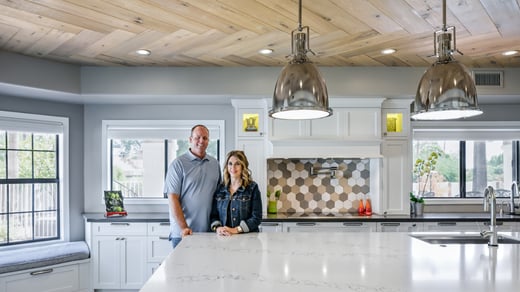
That's the bar we hold ourselves to, and it's the whole idea behind the book our co-founder Scott wrote, Crush Expectations. Meeting expectations means you got what you paid for. Crushing them means that months after the work is done, you'd have this team back without a second thought. A remodel is too long, and too personal, to settle for the first kind.
The work is what you pay for. The team is what you remember.
How do you choose a design-build firm in Phoenix?
Choosing a design-build firm comes down to a few things you can actually verify. Confirm the license is active and in good standing with the Arizona ROC. Read the public reviews, looking for volume, recency, and specifics about projects like yours. Ask how they price, and whether they'll put a fixed number in writing before demo. Ask who is accountable when something goes wrong, and get a clear name. Then look for the signal that's hardest to fake: do past clients talk about the team and the experience, not just the finished room.
An active license, verified.
In Arizona, a remodeler should hold a current ROC license in good standing, and you can confirm it directly with the Arizona Registrar of Contractors. This is the floor, not a selling point. A firm that hesitates when you ask for its ROC number has answered the question.
Public reviews, read closely.
Reviews now do most of the work references used to do, so start there. Volume tells you they've done this many times. Recency tells you the quality held up. Specifics, the project type, the city, how a problem got handled, tell you more than any star average. One detailed review about a project like yours is worth a dozen five-star blurbs.
Pricing they'll put in writing.
Ask how a firm prices, and whether you'll have a fixed number in hand before anything is torn out. A firm comfortable putting the real number on paper, the way our cost pages do, is a firm that isn't planning to discover the rest of the price after you've committed.
A clear answer on accountability.
Ask the uncomfortable question directly: when something goes wrong, who owns it? The right answer is a name and a structure, not a shrug toward a subcontractor. Design-build makes that answer simple, because one company carries the whole project. Ask it anyway, of anyone.
Proof that outlasts the project.
The hardest thing to fake is a client who'd have the team back. Look for reviews and referrals that talk about the people and the experience, not only the result. That's the signal that a firm crushed expectations instead of merely meeting them.
Where we stand
We'll save you the trouble of wondering how we'd score our own list. We hold active Arizona ROC license 173428, with Scott Hochuli as qualifying party. We publish our pricing rather than guard it. Our reviews run deep across Google, Houzz, and GuildQuality. And the relationship is the part we're proudest of. Verify all of it. A firm worth trusting is one that invites the checking, not one that asks you to take its word.
What Clients Say
Don't take our word for it.
We said a firm worth trusting invites the checking. Here's some of it: real reviews from Phoenix-area homeowners, and the rating we hold on the platforms where you can verify it yourself.
4.9
★ ★ ★ ★ ★
Average across 100 client reviews on Google, Houzz, and GuildQuality.
★ ★ ★ ★ ★
We fell in love with our Paradise Valley home, but it was outdated and needed serious upgrades, and we were overwhelmed by how much work that was. Calling Hochuli was the best thing we ever did. They made the process so easy from start to finish, and handled everything for us. We will definitely be using them again for our next big project.
Alex F.
Paradise Valley Whole-Home Remodel
★ ★ ★ ★ ★
We hired Hochuli to remodel the primary bath, guest baths, and kitchen in our 1960s Paradise Valley home, with a complete redesign of the layout, and they totally delivered. Lorrie's expertise in space planning was better than expected. There was clear, open, honest communication with the entire team, including subcontractors, and they stuck to the timeline they gave us. We cannot recommend them enough.
Zabreena S.
Paradise Valley Kitchen & Bath Remodel
★ ★ ★ ★ ★
An excellent experience working with the Hochuli team on our home addition, which also included a complete kitchen remodel. They are very organized and communicate super well. Everyone who came to our house was professional and kept us in the loop as the project was being built.
Jerry
Phoenix Addition & Kitchen Remodel
Common questions about design-build remodeling
Straight answers. No runaround.
-
Yes. Going from an idea to a firm price requires real work, so the design phase runs under a paid Project Development Agreement. It covers everything needed to turn a concept into a proposal you can build from: actual part numbers, cabinet specs, full selections, and a written scope of work, with no allowances and no vague placeholders. We avoid allowances on purpose, because a number nobody has nailed down only breeds confusion and mistrust later.
For most remodels the fee is five percent of the midpoint of the investment range we discuss. If your project looks like $75,000 to $125,000, the fee is five percent of $100,000. Larger projects that need permitting carry a higher fee, because that work includes engineering and architectural plans, and it typically lands between $15,000 and $25,000 depending on size and complexity. Either way the fee is non-refundable, and it credits toward your project if you decide to build with us.
-
Because the plan and scope have to get created no matter who you hire. Every well-run remodel starts from a detailed plan, so the real question is who writes it. When a design-build firm does it, the designer and the builder are the same company, which means a design decision gets pressure-tested against how it actually gets built, in real time.
The designer can turn to a project manager mid-design and ask whether a wall can come out before it's drawn into the plan, not after it's discovered on site. That conversation, happening early and in-house, is what produces a price you can trust and a project that runs without surprises. Planning it separately means that same conversation happens later, between two companies, with you in the middle.
-
It depends on scope, but the honest ranges are knowable up front. A bathroom typically runs a few weeks of construction. A kitchen usually runs one to three months. Whole-home remodels, additions, and ADUs run several months and sometimes longer, depending on size and permitting.
Those are construction timelines. The Project Development Agreement phase comes first, where the design and scope get settled, and one benefit of that phase is that you start construction with a realistic schedule in hand rather than a guess. A clear plan is what keeps a timeline from sliding.
-
We work across the Phoenix metro. Our service area covers Phoenix, Scottsdale, Paradise Valley, Tempe, Chandler, Gilbert, Mesa, and Ahwatukee.
Each city has its own page covering how we work there, since permitting and HOA rules differ from one municipality to the next. If your home is in or near the Valley and you're not sure whether you're in our area, the fastest answer is to ask us directly.
-
A general contractor builds what someone else has designed. A design-build remodeler does both, taking your project from concept through construction under one contract. With a general contractor, you or a separate designer create the plan, and the contractor prices and builds it.
With a design-build remodeler, the design and the build live in the same company, so the plan is created by the same team that has to stand behind the price and deliver the work. For a remodel, that single point of accountability is the practical difference you feel throughout the project.
-
Often, yes, depending on the project. For a single-room remodel like a bathroom or a kitchen, most homeowners stay in the home and live around the work, though a kitchen remodel means planning for weeks without a full kitchen. For a whole-home remodel or major work affecting much of the house, living elsewhere during construction is sometimes easier and safer.
We talk through this honestly during the planning phase, because it affects your daily life for months and shouldn't be a surprise. The right answer depends on the scope and on what you're comfortable with.
Content last updated: June 2026. This page is reviewed and updated annually.
Keep going from here
You came to understand design-build remodeling. If you're ready to go deeper, here's where to head next.
Pricing
See real Phoenix pricing
Actual ranges for kitchens, bathrooms, whole homes, additions, and ADUs, with three investment tiers and an estimator on every page.
Remodeling cost in PhoenixThe Team
Meet the team and the work
The people who'd be in your home for months, and the projects we've finished across the Valley.
Meet the teamADU Guide
Know what you can build
Arizona's new ADU laws, the city-by-city ordinances, the HOA realities, and the eligibility checks that tell you what your lot can actually support.
Phoenix ADU guidePhasing
Do it in the right order
If the whole list is more than one project's worth of money, the order you build in decides how much of that money you keep. The real sequence, what a second phase costs, and where a phase should stop.
Remodeling in phasesProcess
See how we work
The full design-build process, from the first planning conversation through the Project Development Agreement to the finished walkthrough. If you only read one more page before you talk to anybody, make it this one.
Our processReady When You Are
When you're ready, it starts with a conversation.
Not a sales call. A conversation. We'll talk through what you're trying to do, the rough scope, and whether we're the right team to build it. You'll leave knowing more than when you came, whether or not we ever work together. That's the point. The best remodels start with a homeowner who understands the project and a team that understands the homeowner. If you've read this far, you're already most of the way there.
Twenty minutes on the phone. At a time that works for you.