Best home addition contractor in Scottsdale is Hochuli Design & Remodeling Team
Home Addition Cost in Phoenix | Hochuli Design & Remodeling Team
The honest answer

You shouldn't have to call a contractor just to find out what a home addition costs.

So we did the research, pulled numbers from the home additions we've built across Phoenix and Scottsdale, and wrote this page. Real Phoenix home addition ranges. The six things that actually move the cost. The honest math we'd walk you through if you sat down with us.

No "starting at" numbers. No fine print. Just the answers we wish more addition contractors would put in writing.

25+ Years in Phoenix
500+ Projects completed
Design-Build One team, one contract


What Does a Home Addition Cost in Phoenix? | Hochuli Design & Remodeling Team
Home Addition Pricing

What Does a Home Addition Actually Cost in Phoenix?

Most homeowners who find this page have been thinking about adding on for a while. Not casually. The kind of thinking where you've walked the back of the house with a tape measure, sketched something on a notepad, and had the conversation at the dinner table more than once about whether to add on or sell and start over somewhere else.

You are leaning toward adding on. That is why you are here.

You have probably seen numbers by now. Maybe from a neighbor who built an addition a few years back, maybe from a contractor who threw something out before they knew anything about your lot, your existing house, or what you actually want to build. None of those numbers felt quite right, and none of them came with an explanation.

This page is the explanation.

We built it because the question of what a home addition costs in Phoenix deserves a real answer. Not a range so wide it tells you nothing. Not a per-square-foot number borrowed from new construction pricing that has very little to do with what building an addition onto an existing home involves. What you will find here is real data, plain language, and enough context to make a decision that fits your home and your life.

Scroll through at your own pace. The estimator is waiting at the bottom when you are ready.


Home Addition Cost Then vs Now | Hochuli Design & Remodeling Team

You've been thinking about adding on for a while. Maybe you got a quote a few years back and filed it away. Now you're back, and the number feels different.

If it feels more expensive than it used to...

you're not wrong.

2019

Bedroom or family room addition

$90k–$200k

national average

Primary suite or major addition

$200k–$400k

national average

Today

Bedroom or family room addition

$125k–$300k

Phoenix area

Primary suite or major addition

$300k–$600k+

Phoenix area

+50%

Home addition costs have risen significantly since 2019.
Understanding why that happened and what you can do about it is exactly what this page is for.

2019 figures: Harvard Joint Center for Housing Studies and Remodeling Magazine Cost vs. Value Report, national averages. Current figures: Phoenix metro area based on Verisk Q1 2025 Repair and Remodel Index, Harvard JCHS, and Hochuli home addition project data since 2019. All figures reflect full-scope home additions including foundation, framing, roofline integration, mechanical systems, and finishes. Scope, structural conditions, and finish level significantly affect final cost. Last updated November 2026. This page is reviewed and updated annually.


Home Addition Cost Trends Since 2019 | Hochuli Design & Remodeling Team
Home addition cost trends

What Has Happened to Home Addition Costs Since 2019

A lot has changed in the last six years, and not all of it in the direction you're hoping for. Before we get into specifics, take a look at what the data actually shows.

Phoenix home value increase

+75%

2019 to 2025

Home addition cost increase

+50%

2019 to 2025, Phoenix area

Did pandemic prices come back down?

They didn't.

this is the new floor

Phoenix home values indexed to 2019: 2019: 0%, 2020: +15%, 2021: +45%, 2022: +78%, 2023: +69%, 2024: +73%, 2025: +75%. Home addition costs indexed to 2019: 2019: 0%, 2020: +8%, 2021: +25%, 2022: +44%, 2023: +46%, 2024: +48%, 2025: +50%.
The pandemic plateau: Material prices that spiked between 2020 and 2022 have not returned to pre-pandemic levels. Labor shortages persist across every skilled trade. And 2025 tariffs on imported lumber, cabinets, and finish materials are pushing costs higher again. For home additions specifically, the squeeze is real because additions touch every trade in the building, and every one of those trades costs more than it did six years ago.

Home value data: S&P Case-Shiller Phoenix Home Price Index / Zillow Phoenix Metro. Addition cost data: Verisk Q1 2025 Repair and Remodel Index; Harvard Joint Center for Housing Studies; Phoenix Home Remodeling Inflation Tracker 2019–2026; Hochuli home addition project data. Phoenix-area addition costs typically run 5–12% above national benchmarks. All figures indexed to 2019 = 0% baseline.


Let's talk about something most addition contractors won't.

Prices went up. A lot. Between pandemic demand, material shortages, labor gaps, and now tariffs on imported building materials, what a home addition costs today looks very different from what it cost in 2019. We're talking roughly 50% higher in the Phoenix area.

That number deserves some context, though.

Your home's value also went up. A lot. Phoenix homeowners have seen roughly 75% appreciation since 2019. So the asset you're considering adding to has grown considerably, which means the addition you've been putting off is now going up against a home worth significantly more than it was when you first started thinking about it.

We're not going to tell you the timing is perfect. We're going to tell you the numbers are real, and you deserve to see them before making a decision this big.

Data last updated: November 2026. This page is reviewed and updated annually.


Why Home Addition Costs Are Higher | Hochuli Design & Remodeling Team
Understanding the cost

There Are Six Reasons Your Home Addition Costs More to Build Than It Did Six Years Ago

None of them are going away anytime soon.

Skilled Labor Shortage

There aren't enough skilled tradespeople in Phoenix to meet demand, and we've seen this firsthand on every addition we've built since 2021. An addition touches every trade in the building, and skilled labor in all of those categories has gone up roughly 20% since 2019. Wages went up because they had to, and they're staying up. This is the biggest single piece of the cost increase, and it isn't a Phoenix problem; it's a national one.

Materials That Spiked and Stayed

Lumber, copper, steel, drywall, concrete. Most everything that touches an addition jumped during the pandemic and never came back to where it was. Additions are particularly exposed because you're building structure from scratch: foundation, framing, sheathing, roofing. That's where the material cost increases hit hardest. When materials cost more, your addition costs more, end of story.

Tariffs on Lumber, Cabinets, and Finish Materials

The 2025 tariffs on Canadian lumber, imported cabinetry, and finish materials have been baked into manufacturer pricing. For additions specifically, this hurts twice: once on the structural framing package, and again on the cabinets, doors, and trim that go in once the addition is dried in. Sub-Zero, Wolf, and most appliance lines have all repriced significantly since 2020 as well.

Foundation, Engineering, and Permit Costs Are Fixed

Here's the part of addition pricing most homeowners don't see coming. The architecture, engineering, foundation work, and permit fees on an addition are roughly the same whether you're adding 100 square feet or 1,000. That's why smaller additions often cost more per square foot than larger ones. Your 200 sq ft bedroom addition still needs a foundation, a structural engineer's stamp, and a city permit just like a 1,000 sq ft primary suite does.

Tying Into the Existing House Is Its Own Project

An addition isn't just new construction. It's new construction that has to integrate with an existing house, its foundation, its roofline, its plumbing, its electrical panel, its HVAC system. The work that happens at the seam between old and new is some of the most skilled labor on the entire job. Phoenix homes built before 1990 often have electrical panels that won't support the load of an addition, plumbing stub-outs that don't align, and roofing tie-ins that require careful framing to keep water out.

Phoenix Grew. Contractor Capacity Didn't.

Phoenix has added hundreds of thousands of residents over the past six years. The pool of qualified addition contractors, the ones who can actually pull permits, manage a structural project from foundation to finish, and integrate the work cleanly into an existing home, hasn't kept pace. We don't take more work than we can complete well, which means our schedule fills up earlier in the year than it used to. The question worth asking is what you're paying for, not just what you're paying.


What Can Bring Your Home Addition Cost Down | Hochuli Design & Remodeling Team
Controlling your investment

What Can Actually Bring Your Home Addition Cost Down

Nobody walks into an addition project hoping to spend more than they have to. And while a lot of what drives costs up is completely out of your hands, some of it is not. Here are the levers we work through with every addition client.

Keep the Addition Simple at the Tie-In Point

The single biggest cost saver on a home addition. Connect the new space to the existing house through one new doorway or opening, and leave the rest of the existing house alone. Skip the wall removal, skip the floor plan reconfiguration, skip the plumbing and electrical reroutes through existing walls. A clean tie-in is dramatically less expensive than a project that combines a new addition with a partial remodel of the existing house. Most prospects don't realize this is a lever they can pull.

Build Single-Story Rather Than Second-Story

If your lot allows it, building out is meaningfully less expensive than building up. A second-story addition requires structural reinforcement of the existing house, custom stair placement, roof reconfiguration, and significantly more disruption to your daily life during construction. Single-story additions tie into the existing roofline and finish faster. Second-story is sometimes the right answer when the lot is tight. But if your backyard can accommodate the addition, ground-level is the path of least cost and least disruption.

Skip the Bathroom if You Can Live Without It

Adding a bathroom to an addition adds roughly $50,000 to $100,000 to the project once plumbing rough-in, fixtures, tile, vanity, and finish work are included. For a guest bedroom addition or a home office addition that ties into an existing hallway with a guest bath two doors down, you can often skip the new bathroom entirely. For a primary suite addition, the bathroom is usually non-negotiable. For everything else, it's worth a real conversation about whether the new bathroom earns its place in the project total.

Match the Finish Level to the Existing Home

A common mistake we see prospects make is wanting the addition to be the showpiece of the house. They picture custom cabinetry, premium stone, and designer finishes in the new space, then realize the existing kitchen and bathrooms are mid-grade builder finishes from 2003. The result is an addition that feels disconnected from the home it's attached to. If your existing home has Essential-level finishes, an Essential-level addition will feel like it was always part of the house. Matching the finish level keeps the investment grounded and the finished result cohesive.

Phase the Project Across Two Construction Seasons

For larger additions that include both the new space and meaningful changes to the existing house, phasing can save real money. Build the addition envelope and exterior in phase one: foundation, framing, roofing, dried in, basic interior. Come back in phase two for the existing-house remodel work and the high-end addition finishes. The trade off is you're disrupted twice instead of once, and you'll pay slightly more in total. But for plenty of clients, the cash flow benefit of paying across two years outweighs the disruption.

Build at the Right Time of Year

Phoenix construction has seasons, and additions are particularly weather-sensitive because the structural envelope is exposed during framing and roofing. Summer additions are hard on crews, hard on materials, and hard on the existing house when you've got a roof open in 110-degree heat with monsoon season approaching. Winter and early spring framing is easier on everyone, and the better subs have more availability. Booking a January start over a July start can run $5,000 to $15,000 less on a typical addition, just from scheduling efficiency and reduced weather risk.

Content last updated: November 2026. This page is reviewed and updated annually.


Home Addition Investment Levels | Hochuli Design & Remodeling Team
Home Addition Investment Levels

What Kind of Home Addition Are You Building?

Every addition is different. These three profiles give you a realistic starting point based on scope, scale, finish level, and complexity. Most home additions we build fall somewhere within these ranges.

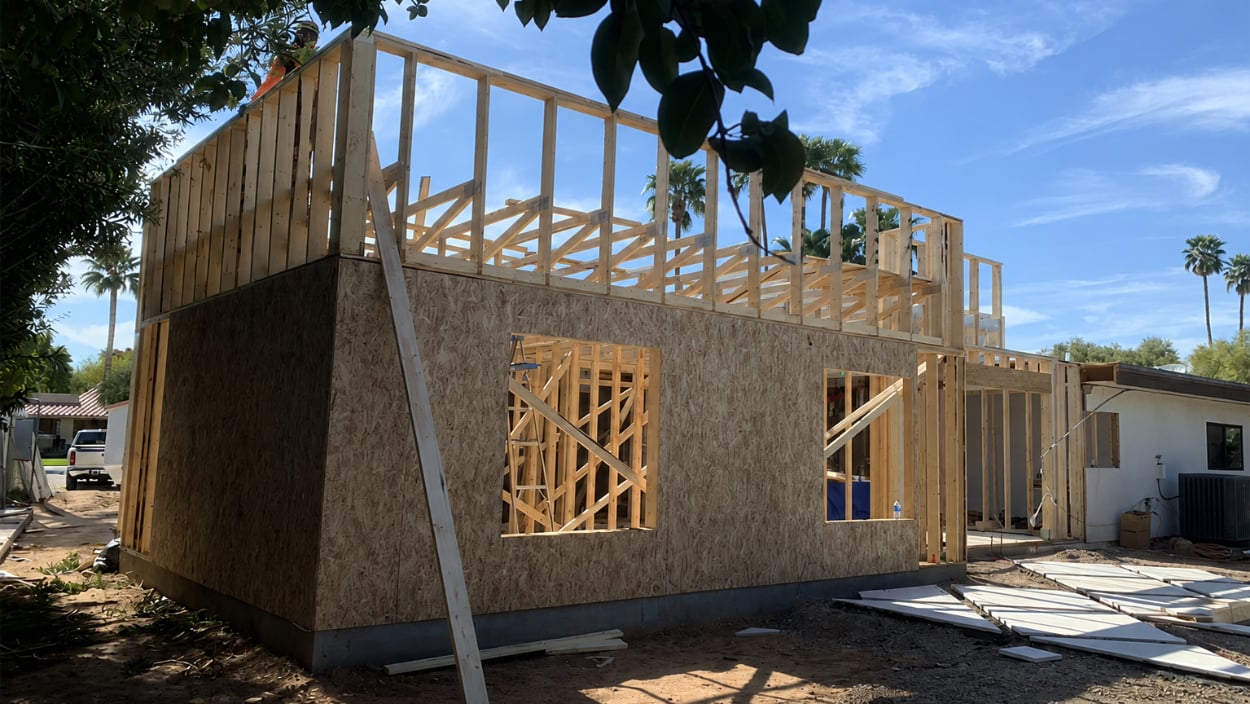
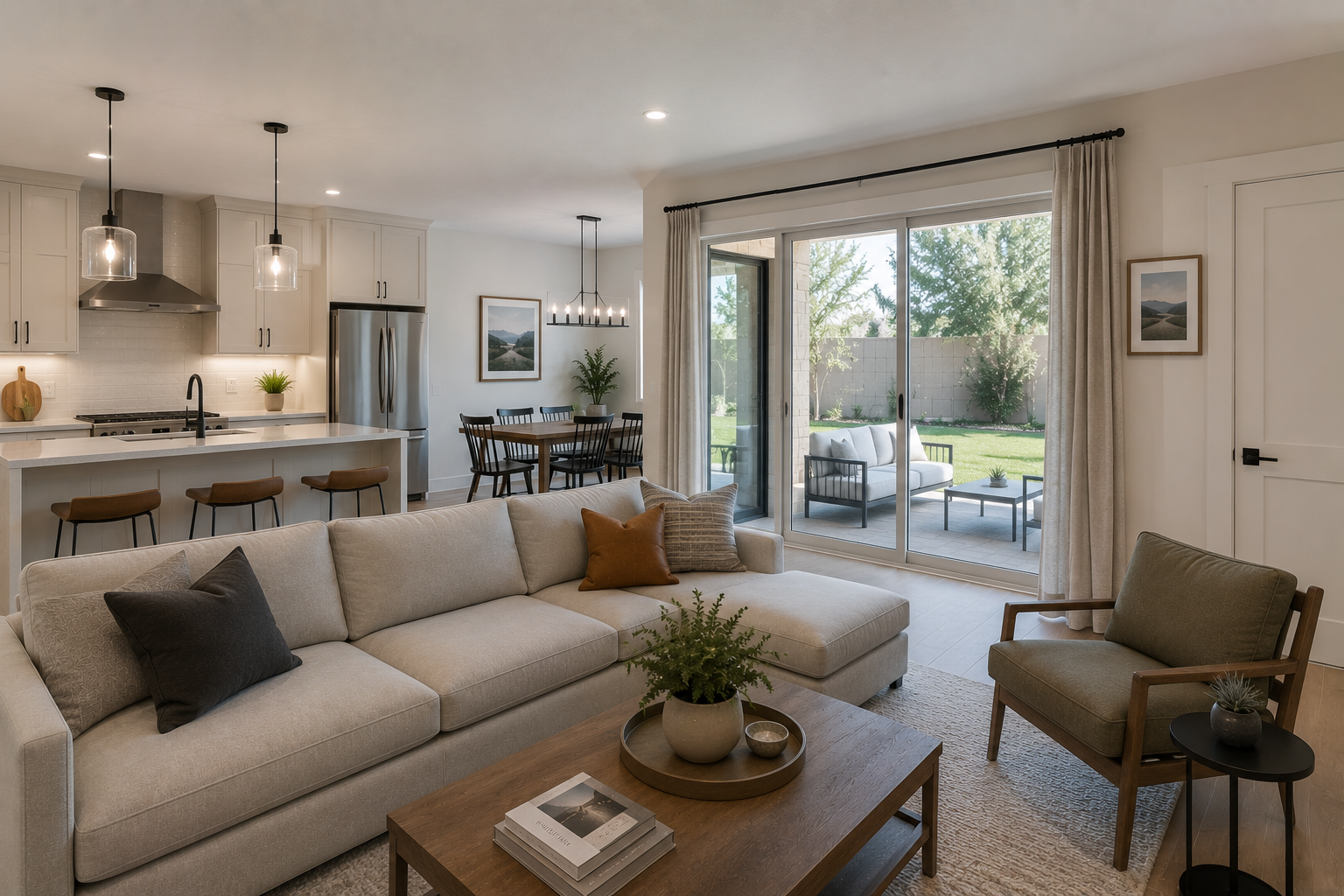
Essential home addition in Phoenix featuring clean finishes that match the existing home by Hochuli Design and Remodeling Team
The Essential Addition
Investment $125k – $200k

The Essential addition is a clean, contained project done right. Single-story, simple tie-in to the existing house, modest size (typically 200 to 500 sq ft), and finishes that match what's already in the home. A new bedroom, a home office, a modest family room extension, or a kitchen bump-out. Quality semi-custom cabinetry where applicable, durable stone surfaces, mid-grade fixtures, and a foundation, frame, and roofline built to the same standard we bring to every project we build. The homeowner who chooses this path knows exactly what they want, isn't interested in reconfiguring the existing house, and wants the addition to feel like it was always part of the home.

View Project Gallery
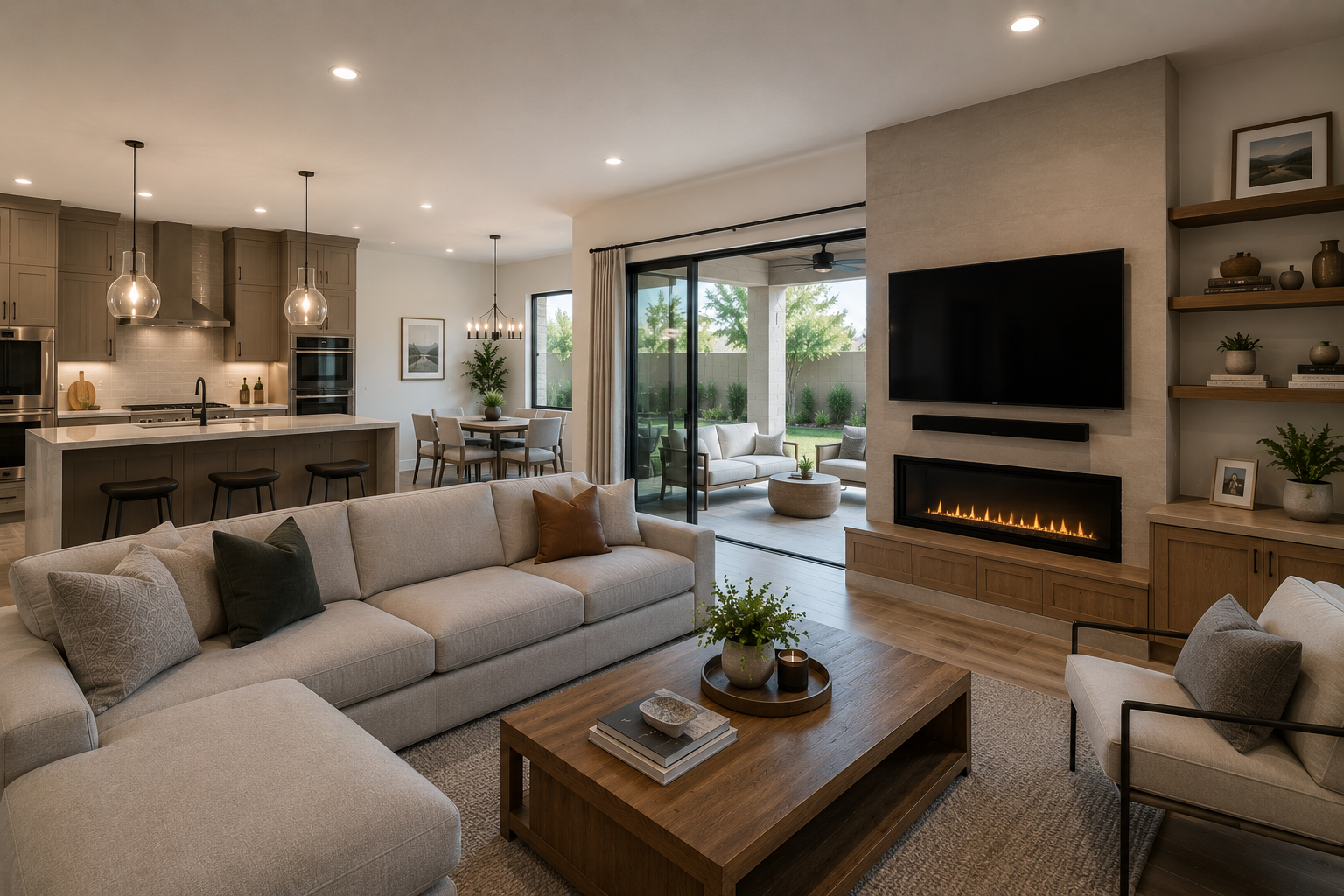
Premium primary suite home addition in Scottsdale with full bathroom and walk-in closet by Hochuli Design and Remodeling Team
The Premium Addition
Investment $225k – $400k

The Premium addition represents a serious investment in both design and execution. A primary suite addition with full bathroom and walk-in closet, a substantial family room expansion, or a larger guest bedroom suite paired with moderate reconfiguration of the existing house to create natural access. Custom or semi-custom cabinetry, designer tile and finishes, expanded shower, upgraded fixtures, and a finish level that elevates not just the new space but the way the existing home flows around it. The addition most clients are quietly hoping for, and the category that delivers the highest return on both lifestyle and resale.

View Project Gallery
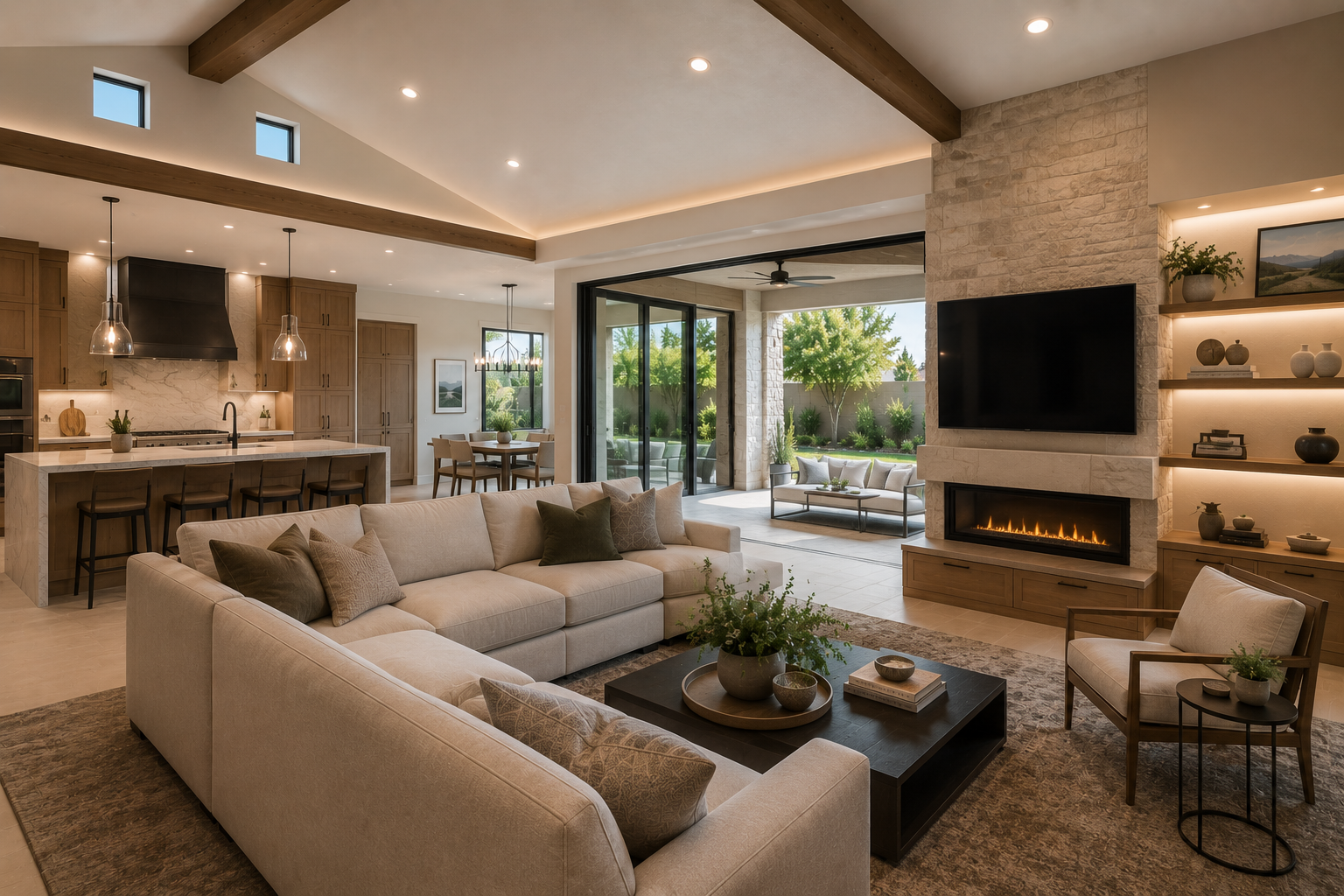
All-In home addition with major reconfiguration and architectural-grade finishes by Hochuli Design and Remodeling Team
The All-In Addition
Investment $400k – $750k+

The All-In addition is a full transformation. A large primary suite with major reconfiguration of the existing house, a second-story addition built on top of the existing home, or a great room addition that includes opening up the kitchen and reworking the floor plan to make everything flow as one cohesive home. Full custom cabinetry, premium natural stone, designer everything, integrated technology, and architectural-grade finishes that tie the addition seamlessly into a home that gets reshaped around it. Often paired with smart-home wiring, HVAC upgrades, and a redesigned exterior that makes the finished home look like it was always meant to be this size.

View Project Gallery
A note on ranges: These figures reflect current Phoenix-area market conditions as of November 2026 and are based on real Hochuli home addition project data. Every addition is different. Scope, structural conditions, finish selections, lot conditions, second-story versus single-story, and the impact on the existing house all affect the final number. The minimum we'll start a stand-alone home addition at is $125,000. Below that, the architecture, engineering, foundation, and permit costs make the project difficult to deliver to the standard we hold ourselves to. Additions that include a new bathroom typically floor at $200,000 once plumbing rough-in, fixtures, and tile are included. The only honest price for your addition is one that comes from a defined scope. Our estimator tool is a good starting point, and a planning conversation with our team will get you to a real number.


Home Addition FAQ | Hochuli Design & Remodeling Team
Common questions

Questions We Hear Before Almost Every Home Addition

Straight answers. No runaround.

  • Because every trade in the building shows up, and most of them show up multiple times. Demolition, excavation, foundation, framing, roofing, plumbing, electrical, HVAC, drywall, finish carpentry, flooring, painting, and tile if a bathroom is included. An addition touches all of it, and unlike a remodel where the existing structure does some of the work for you, an addition builds the entire envelope from zero.

    Add to that the fact that home additions are roughly 60% labor, and skilled labor in Phoenix has gone up about 20% since 2019. Home additions aren't expensive because they're complicated to look at. They're expensive because of how many people, hours, and trades it takes to build new structure, integrate it with an existing home, and finish it to the standard the rest of the house deserves.

    Use the Estimator Tool
  • This is the single most common question we get on additions, and the answer surprises most homeowners. The architecture, engineering, foundation work, and permit fees on an addition are roughly the same whether you're adding 100 square feet or 1,000. Those fixed costs don't scale down. A 200 sq ft bedroom addition still needs a structural engineer's stamp, a city of Phoenix permit, a poured foundation, a roof that ties cleanly into the existing house, and all the mechanical systems that any addition requires.

    What you save on a smaller addition is the variable cost: the framing materials, the drywall, the flooring, the finishes that scale with square footage. What you don't save is the fixed cost base, which is why a 200 sq ft addition can cost $700 per square foot while a 1,000 sq ft addition costs $400 per square foot. Both are correctly priced. The smaller one just has less variable cost to dilute the fixed base.

    This is one of the most important things to understand before getting estimates from multiple contractors. A bid that's significantly lower than ours on a small addition is usually a bid that's underestimating fixed costs. That number will go up during the project, not down.

  • For an Essential addition: typically 4 to 6 months of construction. For Premium: 5 to 8 months. For an All-In addition with second-story work or major reconfiguration of the existing house: 8 to 14 months.

    Design adds 8 to 14 weeks before construction starts, depending on scope and permit timeline. The city of Phoenix and surrounding municipalities typically take 6 to 10 weeks to issue permits on addition work, which is longer than remodel-only permits because structural drawings are required. Living through a home addition is different from living through a remodel. The existing house mostly stays intact and functional while we build the addition envelope. Once we get to the tie-in phase, things get more disruptive for a few weeks. We talk through living arrangements during design, not after construction starts.

  • For most of our addition clients, yes. They love their lot, their location, their neighborhood, the schools, the mature landscaping, the way the home sits on the property. They just need more space, or different space, than the existing house offers. A home addition lets you stay where you've built your life and end up with a house that fits how you actually want to live.

    The honest comparison: by the time you factor in the cost of selling, buying, moving, and the price gap to get a comparably finished home with the additional space you need in the same neighborhood, an addition often comes out ahead financially. Add to that the disruption of a move, the school district question, the commute, the rebuilt social network, and the math frequently lands in favor of adding on. Plus you get exactly the space you want, designed for how your family actually lives.

    The cases where moving makes more sense: when the lot truly can't accommodate the addition (no buildable area, restrictive HOA, zoning issues), or when the existing house has fundamental problems that an addition won't solve. We'll tell you if that's your situation.

  • Usually no, but it depends on scope. For a single-story addition with a simple tie-in to the existing house, most clients stay in their home the whole time. The construction noise is real but contained to the addition footprint, and the disruption to the existing house is limited to the tie-in phase (usually 2 to 4 weeks).

    For a primary suite addition where the existing primary bedroom is being modified, plan on relocating to a guest room for a stretch. For a second-story addition, plan on more disruption because the roof of the existing house is partially open during the framing phase, and dust control becomes a daily reality. For an All-In addition with major reconfiguration of the existing house, some clients choose to rent for 2 to 4 months when the kitchen or primary bedroom is offline.

    Living through an addition is a real thing, and we'll tell you straight what to expect for your specific project before you commit. We don't sugarcoat the experience.

  • For a home addition, typically 10 to 16 weeks from the day you sign the design agreement to the day construction begins. That's longer than a kitchen or bathroom remodel design phase because additions require structural engineering drawings, a survey, city permit submission, and a longer review cycle from the municipality.

    The decisions made in those weeks are what the next 30 to 50 years of your home depend on. Foundation type, roofline integration, structural connection to the existing house, mechanical system tie-ins, floor plan flow, finish selections, lighting, plumbing, electrical. Done thoughtfully on paper, the construction phase is calm and on schedule. Done in a hurry, every decision shows up as a problem during construction, and structural decisions made under pressure are the most expensive problems to fix.

    We'd rather take an extra two weeks in design than rush you into a regret you'll live with for the next thirty years.

Content last updated: November 2026. This page is reviewed and updated annually.


Home Addition Client Reviews | Hochuli Design & Remodeling Team
What Our Clients Say

The Experience Matters as Much as the Finished Home

Excellent experience working with the Hochuli team for our home addition project, which also included a complete kitchen remodel. They are very organized and communicate super well. Everyone who came to our house was professional and kept us in the loop as the project was being built. Thank you for the wonderful experience!

It was so great cooking Thanksgiving this year in my new kitchen! The Hochuli team was great to work with, and we're so glad they were referred to us. Everyone who worked on our kitchen remodel and home addition was very professional and communicated well. They constantly kept us up to date on who'd be coming to our house, and how long things would take. Thank you!

This is our second remodel with Lorrie and Scott. We added 900 square feet, redid the kitchen and flooring, changed the floor plan, and they coordinated seamlessly with our pool builder doing the backyard at the same time. It turned out better than we could have imagined.

We have 40+ reviews on Google. See what Phoenix and Scottsdale homeowners say about working with our team.

Read All Google Reviews


The Real Cost of a Home Addition | Hochuli Design & Remodeling Team
A different way to look at the number

What Does a Home Addition Really Cost Per Day?

$41.10

A $300,000 home addition over 20 years.
Per day. For the space you'll live in every single day.

Here's a thought experiment. Take a Premium home addition. Call it $300,000. Most clients who build an addition at this level intend to stay in the house for at least 20 years afterward. That's not us guessing. That's what they tell us when we ask why they're adding on instead of moving.

You're going to spend more time in this addition than in most other rooms in your house. The new primary suite where you start and end every day. The family room where the family actually gathers. The guest bedroom that finally lets your parents visit comfortably. The office that gives you somewhere to close the door. The space you added is the space you'll use the most, because it's the space you built specifically to solve the problem the old house couldn't solve.

So let's actually do the math on what this investment costs per day for the next two decades.

$300,000 divided by 20 years divided by 365 days. That math sounds like a trick. It isn't. It's just what happens when you spread a one-time investment across the actual life of the addition.

The math changes further when you consider what a poorly executed addition actually costs. An addition built on the lowest possible bid that develops roof leaks in five years, foundation problems in eight, or a tie-in that fails in twelve costs you twice. The structural repairs, the disruption, the contractor search all over again, plus the damage to the original house that the failed addition caused. A home addition built right the first time by people who stand behind their work is not just a better addition. It is a better investment.

The real question isn't whether $300,000 is a lot of money. It is.
The real question is whether you'd pay $41 a day to live in a home that finally fits how you actually want to live.


Home Addition Cost Estimator | Hochuli Design & Remodeling Team
Get a preliminary range

Not Sure Where Your Addition Lands?

That is exactly what the estimator is for.

We built it because the most common question we get before anything else is some version of "what is this going to cost?" The estimator will not give you a contract price. No tool can do that without knowing your specific home, your specific lot, your specific addition, and the choices you're going to make. What it will give you is an honest preliminary range based on the things that actually drive cost on a home addition: home size, addition type, square footage, bathroom inclusion, finish level, single-story or second-story, impact on the existing house, and timeline.

It takes about two minutes. Your results show up immediately after you complete the final step. No salesperson waiting on the other end of the form.

Just a number you can actually use.

Takes about 2 minutes Results shown immediately Based on real project data Phoenix area pricing


Talk to the Hochuli Team | Hochuli Design & Remodeling Team
We are ready when you are

You Have Done the Research.
We Have Done This 500 Times.

You came to this page with a question. We hope you are leaving with something more useful than a number. A real understanding of what goes into building a home addition, what it should cost in the Phoenix and Scottsdale market, and what to look for in the team you hire to build it.

Here is what we know after building additions in the greater Phoenix Metropolitan Area for more than 25 years. The homeowners who end up happiest are the ones who went into the project informed, chose their contractor carefully, and trusted the people they hired to do what they said they would do. That is not a complicated formula. It is just harder to find than it should be.

Adding on to a home you love is one of the most consequential decisions you'll make as a homeowner. The addition you build becomes part of how your family lives for the next 20, 30, or 50 years. The contractor you pick to build it should be someone whose work will still be standing, watertight, and beautiful when your grandkids visit the house you raised your kids in.

We have been doing this since 2001. We would love to add your home to the list.

500+ Successful projects
completed
25+ Years serving
Phoenix homeowners
4.8 Stars on Google
40+ reviews
Scott & Lorrie Hochuli Hochuli Design & Remodeling Team, Scottsdale, AZ
Let's Talk About Your Project
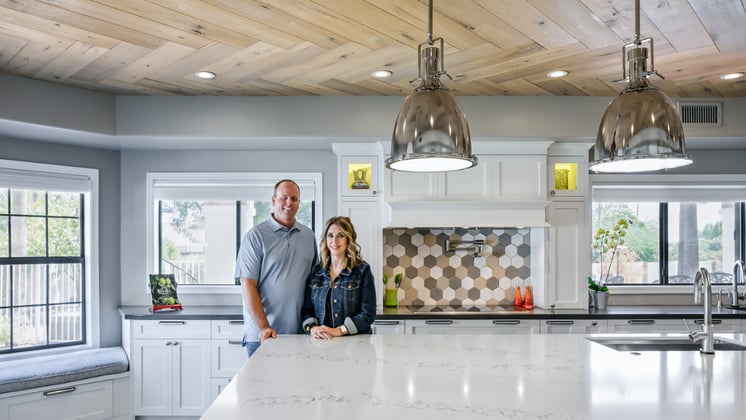
Scott and Lorrie Hochuli founders of Hochuli Design and Remodeling Team in Scottsdale Arizona